"My day begins at dawn as I take my cup of strong black espresso outside to watch the sunrise. I learned this ritual from my mother, who worked in a bread shop. Bakers are the great philosophers of the world, mostly because they have to get up early. When the world is quiet, great art is created - or, at the very least, conceptualized. Now is the moment to sketch, make notes, and dream" - Rococo by Adriana Trigiani
My day feels fulfilling when I have (_____)....
For me, the fill in the blank is read, gone for a walk (save for extreme weather conditions, my dogs wouldn't allow otherwise), observed nature, drank enough water, savored tea, not spent too much precious time surfing mindlessly online and watching television, and listened to some soothing music, like classical, or uplifting, like French. Consider what your fill in the blank moments are. I love the passage from Rococo as a reminder that waking up with mother nature (and being disconnected) feels healthy for my mind, body and soul. To me, it's about the tone you are setting for the day. Checking e-mail or watching the news (or looking at it online) never feels like a good way to start my day. Nor does time online feel like a good way to end it. A cup of herbal tea does, as well as a page or two from a book if that's all this tired mom of a baby and thee-year-old can manage. Sometimes I don't even accomplish that. There are nights I'm too exhausted to brew the tea and just want restful sleep.
I have never been failed to be cheered when I visit a library or bookshop, although a library is more frugal for our one-income family. Fred warned Ricky in the I Love Lucy episode, "Lucy Gets a Paris Gown," that letting Ethel and Lucy go to a Parisian fashion show was like taking two mice on a tour of a cheese factory. In a book shop, I'm in the "mice in the cheese factory" territory, although I still support my local bookseller when I can. But I digress. Part of why I read is not just the story, but that feeling when your soul is stirred by a passage that will always stay with you - is now in fact a piece of you. Storytellers continue to remind me of what makes me feel most alive: time spent in nature and being connected to the earth, traveling and experiencing new things, savoring the seasons, the beauty of simplicity, eating well and eating of the garden's bounty.
With two little ones and two dogs all wanting a piece of my attention throughout the day, I haven't been able to find the combined time, energy, desire and inspiration to do much writing. So many posts have ended up in the writing graveyard. However, I couldn't let my memories of last year's storytellers fade away, and I think it's fitting to remember them on St. Patrick's Day. Far from a drinking holiday, I remember on this day a country I visited in my twenties and what I loved about it: its majestic natural beauty, castles, tea, cozy pubs, warm, friendly people, and above all the great storytelling through both written form and song. Today, I celebrate authors here and their legacy to us all, their words that shape our lives. An Irish storyteller, Alice Taylor, makes my list for both last year and this year.
On traveling:
"Now that she was conscious there was no end to her questions and exclamations, for Dot was a born traveler, meant to go places, unlike us." - The Beet Queen by Louise Erdrich
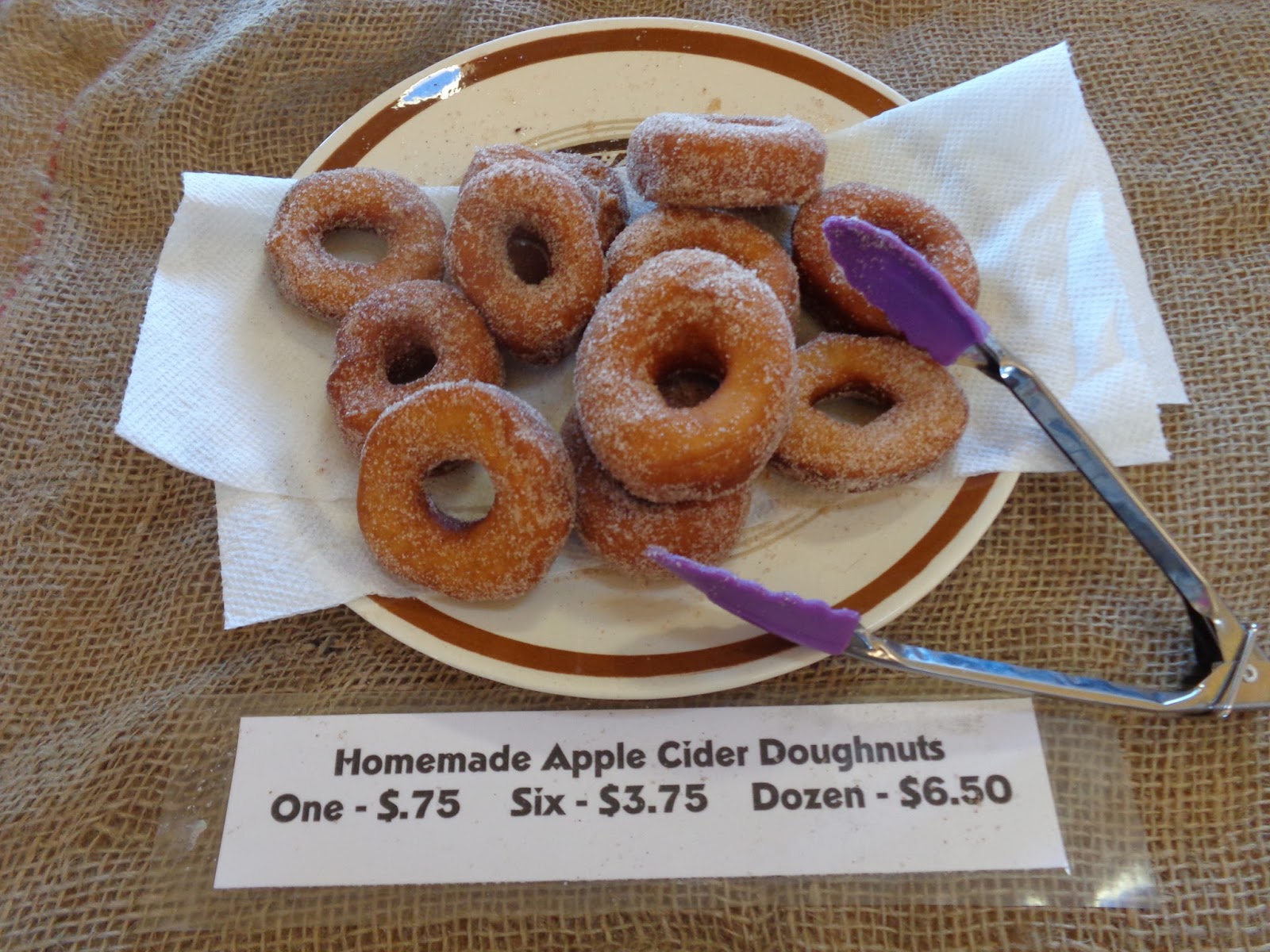
Traveling is something that has shaped my life so, for just a few days spent in a location still stays with me years later. I still daydream often about the West. Maybe you're like me and your circumstances don't allow big vacations at the moment. But looking over photos to include here I find how restorative and underrated even the humble day trip is, like our autumn outing to New Paltz, New York, where we picked a farm by chance, this time Dressel Farms, to pick apples and zinnias, followed by a dinner at the Mountain Brauhaus in Gardiner, New York, a wonderful recommendation of a friend. The farm and restaurant were both new places to us, and you don't need a plane ticket to experience the new.


Local apple cider with the best pretzel Steve and I have ever eaten on the cheerful patio of the Mountain Brauhaus while we waited for our table. Note the small flowers on the table in what looks like a salt or pepper shaker. I've given away so many of our vases, keeping just a few, mostly from my grandmother. Whenever I have flowers, really I like a simple thing like a mason jar to showcase mother nature's beauty. The older I get, the more I'm drawn to simplicity.


"A trip to Paris had sounded so adventurous when I was first talking about it a year earlier. People spoke about the city with dreamy longing, as though Paris possessed a magic that could not be found elsewhere. I'd never heard anyone talk about Paris without sighing. The city was a Promised Land that held appeal for most everyone: artists, lovers, even people who just liked cheese. - We'll Always Have Paris: A Mother/Daughter Memoir by Jennifer Coburn
 The ratatouille at La Rivage in New York City, my bit of France for my fortieth birthday, followed by a trip to see "An American in Paris" on Broadway when it was still in production. To me, my love affair with French things is about having a love affair with life itself, and like the tone of my day Rococo reminded me of, I wanted this to be the tone for the years ahead for my life. At age 41 now, I'm still striving for better habits for myself, and like most everyone, I'm a work in progress.
Paris was the first big vacation Steve and I took together, but I almost wish a more matured me visited the city. I'd love to take Grace and Pearl there one day, to go back to Versailles to see the gardens (it poured the day we were there) and take a trip to Monet's Giverny. For now, it is armchair traveling via films, books and social media for me.
"Emma fussed with the cinnamon-rose starts she had planted all over the backyard. She was as tender with the roses as if they were her children, and every hour or two she watered them." - The Chili Queen by Sandra Dallas. This is my fifth Sandra Dallas novel, and I love this writer of historical novels set in the West. My mother and I both feel at times as though we lived in earlier time. Why are we so drawn to them? I'm not nostalgic for outdoor plumbing or primitive medical care, certainly.
Geraniums are my flower children, and my botanical portal to the past. I envision my grandmother on the other end.

"The people of Provence greeted spring with uncharacteristic briskness, as if nature had given everyone an injection of sap." - A Year in Provence by Peter Mayle
Spring each year means the anticipation of daffodils, pansies, new growth hidden and thriving under the darkness in my garden, and the New York Botanical Garden's annual orchid show. Here from the 2016 show.

"The first peaches of spring - the first peaches! Buy, eat, purge your bowels of the poisons of winter!" - The Good Earth by Pearl S. Buck
Summertime peaches at Demarest Farm in Hillsdale, New Jersey. So many people in my area have fond recollections of Van Riper's farm in Montvale from their childhood, as do I. It is long shuttered, but it's funny it still pulls at so many memory strings. I love visiting family farms all four seasons.

"Passing by a waist-high stone wall, he was surprised to find fine-thorned brambles passed up against it. He stopped again. The plants made a dense blanket woven of brown, gray, and green. And it was studded with purple beads in tight cones. Yes, wild blackberries, he knew them! Nature's artistry. He'd seen nothing more beautiful in the tapestry collection at Victoria and Albert Museum in London." -The Finest Mask, a short story by J.J. Brown

"Her ashes are scattered under the oak tree in the southernmost farm fields.
Louise remembered that tree from the tour with Laurent - firmly planted, ancient, maybe even wise, reaching for the sky. It seemed a tree that would share the secrets of the universe if one sat underneath its branches long enough, like the stories of the Buddha she'd heard in Sunday school as a kid." - After the Ballet by Jessica Rosevear Fox, a short story about two sisters, one a retired ballerina, traveling to a lavender farm they unexpectedly inherited in Provence. It's so worth seeking out the lesser known authors like J.J. Brown and Jessica Rosevear Fox who are making great art with their words.
If trees could talk. Washington stayed here at the Steuben House in Hackensack, New Jersey.

"The family took all the seeds from the garden and then they buried Nokomis there, deeply, wrapped in her blanket with gifts and tobacco for the spirit world. They buried her simply. There was no stone, no grave house, nothing to mark where she lay except the exuberant and drying growth of her garden.
Nokomis had said:
I do not need a marker of my passage, for my creator knows where I am. I do not want anyone to cry. I lived a good life, my hair turned to snow, I saw my great grandchildren, I grew my garden. That is all.” - Makoons by Louise Erdrich.
While I cannot wait to share Laura Ingalls Wilder's Little House series with my daughters, I also plan to share with them Erdrich's Birchbark series following an Ojibwa tribe in the 1800s roughly about the same time Wilder's stories take place.
 Pictured here is an eighteenth century tavern garden recreated at the Bergen County Historical Society in Hackensack, New Jersey. Nokomis so cherished her seeds. Gardening is something I want my daughters to learn about. Grace still remembers when she picked tomatoes at the New York Botanical Garden's family garden in the fall. She loves looking at pictures of her putting cherry tomatoes in a brown bag. I hope the seeds have been planted in her young mind.
"This is not your land," William Lobb said.
"Oh, it is, it is. I got the papers. I can show you, back at the camp."
"This is Indian land, if it's anyone's." William Lobb spoke as if he hadn't heard Billie Lapham. "Those Miwoks encamped just south of here - they've been here longer than you. It's theirs, or it's God's land - take your pick.” - At the Edge of the Orchard by Tracy Chevalier, a dark look at frontier life in Ohio, then moving the story on to California amidst the Gold Rush.
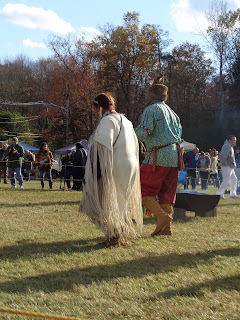
At the Ramapough Powwow in Ringwood, New Jersey, in October. I feel very connected to Native American culture because of their own connection to the land.
"No - the stars are close and dear and I have joined the brotherhood of the worlds. And everything's holy - everything, even me." - The Grapes of Wrath by John Steinbeck. I started reading Steinbeck later in life, East of Eden many years ago and more recently Mice of Men, Cannery Row and The Pearl. Cannery Row has been my favorite so far. But I love Steinbeck's passage here in finding the holiness in all things.
Finding my greatest spiritual connections in nature and gardens, here at the New York Botanical Garden, my favorite place in all of New York.

On living in the moment:
"Cleaning and painting finished, the next target was the big ware press in the parlour. Out came delicate china which had been in the family for years. My mother's respect for the Stations weighed against her fear of breakage, but the Stations won every time. Once when a precious jug was broken she mourned it for days, telling us all how long it had been in the family. Finally, Dan, our part-time travelling farm worker, said, "Missus, if it was here that long it was time to break it." And that was the end of that." - To School Through the Fields: An Irish Country Childhood by Alice Taylor
 Dishes at the Bergen County Historical Society. Ms. Taylor's passage reminds me to use, not showcase or store, my cherished dishes. I now use a teapot each day that my mother brought over on a visit to Switzerland that belonged to my paternal grandmother. It has a blue a white design, and find I love blue and white dishes the most. They remind me of my grandparents, simpler times, and are a way to bring a piece of history into the present. If I had to come up with a "These are a Few of My Favorite Things" song of my own a la the Sound of Music, blue and white dishes would make the list (as would geraniums, red and white checked tablecloths and napkins, earl grey tea, Laura Ingalls Wilder and Paris). In my never ending household decluttering campaign, my policy with dishes, vases and housewares has been "no museum pieces." Obviously there are items we'll need for larger entertaining, but if I'm not using the items regularly or unless they have a strong sentimental attachment, like a few pieces from my grandparents, I've passed them on. I'm also thinking about donating many of our cheaper plates (which I have been doing already) and using the nicer dishes, although I'm sure we'll still have and use what I refer to as our hodgepodge of Daisy and Onslow mugs (think Keeping Up Appearances, horrifying Hyacinth when she received tea in them). Does it sound corny that I always admire the dishes in scenes of favorite shows like Downton Abbey, Mr. Selfridge, Poldark, TURN: Washington's Spies, Keeping Up Appearances and When Calls the Heart? If you love fine dishes as much as I do, read Sarah Grey's "Setting the Table: One woman's reason for using - not storing - heirloom dishes" in the spring 2017 issue of Edible Jersey. She writes,
"I use the good china because the world is huge and full of pain and loss; if a plate cracks or a teacup shatters, no one is harmed. What’s the point of life if the good stuff always stays locked away, safe and forbidden? When something beautiful finds its way to you, you must incorporate its beauty into your life, even if that means you risk losing it."
Bravo, Sarah. You sound like a kindred spirit, an old soul.
"In her mind she could remember about six different tunes from the pieces of his [Mozart's] she had heard. A few of them were kind of quick and tinkling, and another was like that smell in springtime after a rain. But they all made her somehow sad and excited at the same time.
She hummed one of the tunes, and after a while in the hot, empty house by herself she felt the tears come in her eyes.” - The Heart is a Lonely Hunter by Carson McCullers
While I have so much to learn about it, all I know it that putting on classical music stills my soul, like this autumn rose at the New York Botanical Garden.

"While living next to Mariage Freres, I fell in love with drinking tea. There's just something luxurious about sipping a fragrant tea from a faraway land." - Bright Lights Paris (Shop, Dine and Live...Parisian Style) by Angie Niles. How many coffee table books do we ever really flip through? Hardly any here, which is why I gave the majority of mine away. I think of this visually stunning book as a more compact, accessible book than those bulky behemoths that just collect dust. Just looking at it for a few moments whisks me away to Paris. Niles wrote about tea in "The French Art of Tea" section as well as finding a love of Moroccan mint tea. Like finding a passion for books later in life, I also really fell in love with tea later and the "art" of it, as Niles rightly referred to it. I think the first seeds were planted though as a young girl served tea in fine china along with a homemade fruit at a relative's house in Switzerland. It all seemed so elegant. Here, Moroccan mint tea from a day trip years ago to Tangier. The memory of it lasted longer than the few moments it took to drink it. Can you imagine if this was in a Styrofoam cup? Yes, there is an art, a beauty, in tea if you drink it properly.

On the perfect marriage of good meals and good conversation:
"Four days, eight days, twelve days passed, and he was invited to teas, to suppers, to lunches. They sat talking through the long green afternoons - they talked of art, of literature, of life, of society and politics. They ate ice creams and squabs and drank good wines." - Dandelion Wine by Ray Bradbury
This fits in with French good living to me. I was saddened to hear of the closing of Pigalle in New York City where I share many a civilized lunch with a friend discussing those very things in Dandelion Wine. I'm so grateful to have e-mail to connect me with friends who live far, but how I miss conversation. My blog is probably outdated since most people want the pithiness of Instagram, just a quick photo and caption, or a few characters on twitter. So many people's blogs are on hiatus or retired, and I understand why, but I miss reading them and their musings on frugality, the thrift market, animal welfare, books, and so on. They were a conversation too in a way. I like to think mine is, or at least a diary of sorts.
The apple tarte tatin at Pigalle, which followed a conversation on books, family, politics, and life. Farewell and thanks for all of the good meals.

Lastly, on reading:
"I looked at the book lying on a table. Though not a great reader myself, I knew that those who were - even Nora - could grow testy when one came between them and their books." - Hanging Mary by Susan Higgenbotham, an engaging novel of Mary Surratt and the Lincoln assassination, a book I would have never found if not for it sitting on the library shelf nudging its way into my life.
Isn't it funny how books find their way into our lives as people do? So much of what I have read has been because another reader passed their book on. Another part of my household downsizing campaign has been to drastically downsize my book collection, passing them on to charity resale shops. I used to be cheered by the sight of so many books in my home but now it's quite the opposite. I have kept some cherished favorites for now that I'd either like to share with Grace and Pearl or have my own sentimental reasons. Others I had every intention of reading but have sat on my shelf for too many years. I believe books are living things that should keep on telling their stories, which they can't do collecting dust on a shelf.
In Seattle, a Little Free Library. If you love a book, set it free.
 .
.
These were my storytellers for 2016 and a record of where they found me:
Goodwill
The Beet Queen by Louise Erdrich
A Year in Provence by Peter Mayle
Library
To School Through the Fields: An Irish Country Childhood by Alice Taylor
The Heart is a Lonely Hunter by Carson McCullers
The Grapes of Wrath by John Steinbeck, library book sale
We'll Always Have Paris: A Mother/Daughter Memoir by Jennifer Coburn
Dandelion Wine by Ray Bradbury
Hanging Mary by Susan Higgenbotham
Makoons by Louise Erdrich
Shaw's Book Shop, Westwood, New Jersey
At the Edge of the Orchard by Tracy Chevalier
After the Ballet (Short Story) by Jessica Rosevear Fox
The Well Read Bookstore, Hawthorne, New Jersey (Now sadly shuttered)
The Good Earth by Pearl S. Buck
Bright Lights Paris (Shop, Dine and Live...Parisian Style) by Angie Niles
Better World Books
The Chili Queen by Sandra Dallas
Loan from a friend
Rococo by Adriana Trigiani
Gift
The Finest Mask (Short Story) by J.J. Brown, which is featured in the collection Alt. History 102
My day feels fulfilling when I have (_____)....
For me, the fill in the blank is read, gone for a walk (save for extreme weather conditions, my dogs wouldn't allow otherwise), observed nature, drank enough water, savored tea, not spent too much precious time surfing mindlessly online and watching television, and listened to some soothing music, like classical, or uplifting, like French. Consider what your fill in the blank moments are. I love the passage from Rococo as a reminder that waking up with mother nature (and being disconnected) feels healthy for my mind, body and soul. To me, it's about the tone you are setting for the day. Checking e-mail or watching the news (or looking at it online) never feels like a good way to start my day. Nor does time online feel like a good way to end it. A cup of herbal tea does, as well as a page or two from a book if that's all this tired mom of a baby and thee-year-old can manage. Sometimes I don't even accomplish that. There are nights I'm too exhausted to brew the tea and just want restful sleep.
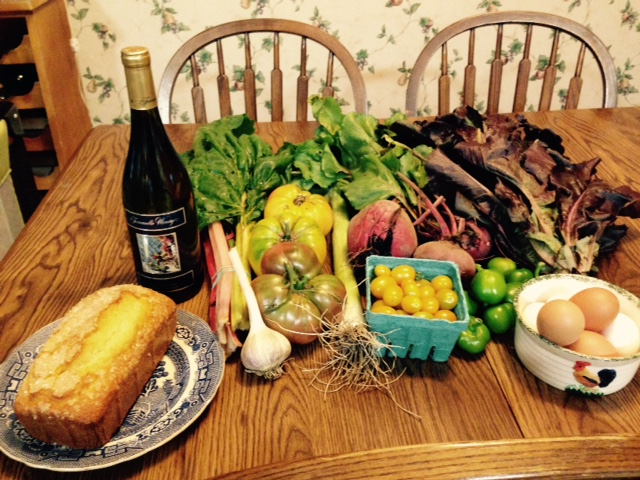
I have never been failed to be cheered when I visit a library or bookshop, although a library is more frugal for our one-income family. Fred warned Ricky in the I Love Lucy episode, "Lucy Gets a Paris Gown," that letting Ethel and Lucy go to a Parisian fashion show was like taking two mice on a tour of a cheese factory. In a book shop, I'm in the "mice in the cheese factory" territory, although I still support my local bookseller when I can. But I digress. Part of why I read is not just the story, but that feeling when your soul is stirred by a passage that will always stay with you - is now in fact a piece of you. Storytellers continue to remind me of what makes me feel most alive: time spent in nature and being connected to the earth, traveling and experiencing new things, savoring the seasons, the beauty of simplicity, eating well and eating of the garden's bounty.
With two little ones and two dogs all wanting a piece of my attention throughout the day, I haven't been able to find the combined time, energy, desire and inspiration to do much writing. So many posts have ended up in the writing graveyard. However, I couldn't let my memories of last year's storytellers fade away, and I think it's fitting to remember them on St. Patrick's Day. Far from a drinking holiday, I remember on this day a country I visited in my twenties and what I loved about it: its majestic natural beauty, castles, tea, cozy pubs, warm, friendly people, and above all the great storytelling through both written form and song. Today, I celebrate authors here and their legacy to us all, their words that shape our lives. An Irish storyteller, Alice Taylor, makes my list for both last year and this year.
On traveling:
"Now that she was conscious there was no end to her questions and exclamations, for Dot was a born traveler, meant to go places, unlike us." - The Beet Queen by Louise Erdrich
Traveling is something that has shaped my life so, for just a few days spent in a location still stays with me years later. I still daydream often about the West. Maybe you're like me and your circumstances don't allow big vacations at the moment. But looking over photos to include here I find how restorative and underrated even the humble day trip is, like our autumn outing to New Paltz, New York, where we picked a farm by chance, this time Dressel Farms, to pick apples and zinnias, followed by a dinner at the Mountain Brauhaus in Gardiner, New York, a wonderful recommendation of a friend. The farm and restaurant were both new places to us, and you don't need a plane ticket to experience the new.


Local apple cider with the best pretzel Steve and I have ever eaten on the cheerful patio of the Mountain Brauhaus while we waited for our table. Note the small flowers on the table in what looks like a salt or pepper shaker. I've given away so many of our vases, keeping just a few, mostly from my grandmother. Whenever I have flowers, really I like a simple thing like a mason jar to showcase mother nature's beauty. The older I get, the more I'm drawn to simplicity.

Who says German food is all beer and bratwurst? German sparkling mineral water and their vegan special that day, a roasted carnival squash with farro, corn, tomatoes, and mushrooms in a parsley lemon pesto sauce. This was like someone went into their garden and picked its bounty. How good it does a body and soul to eat plant foods like this.

"A trip to Paris had sounded so adventurous when I was first talking about it a year earlier. People spoke about the city with dreamy longing, as though Paris possessed a magic that could not be found elsewhere. I'd never heard anyone talk about Paris without sighing. The city was a Promised Land that held appeal for most everyone: artists, lovers, even people who just liked cheese. - We'll Always Have Paris: A Mother/Daughter Memoir by Jennifer Coburn

Paris was the first big vacation Steve and I took together, but I almost wish a more matured me visited the city. I'd love to take Grace and Pearl there one day, to go back to Versailles to see the gardens (it poured the day we were there) and take a trip to Monet's Giverny. For now, it is armchair traveling via films, books and social media for me.
On gardens, nature, and the change of seasons:
"Emma fussed with the cinnamon-rose starts she had planted all over the backyard. She was as tender with the roses as if they were her children, and every hour or two she watered them." - The Chili Queen by Sandra Dallas. This is my fifth Sandra Dallas novel, and I love this writer of historical novels set in the West. My mother and I both feel at times as though we lived in earlier time. Why are we so drawn to them? I'm not nostalgic for outdoor plumbing or primitive medical care, certainly.
Geraniums are my flower children, and my botanical portal to the past. I envision my grandmother on the other end.

"The people of Provence greeted spring with uncharacteristic briskness, as if nature had given everyone an injection of sap." - A Year in Provence by Peter Mayle
Spring each year means the anticipation of daffodils, pansies, new growth hidden and thriving under the darkness in my garden, and the New York Botanical Garden's annual orchid show. Here from the 2016 show.

"The first peaches of spring - the first peaches! Buy, eat, purge your bowels of the poisons of winter!" - The Good Earth by Pearl S. Buck
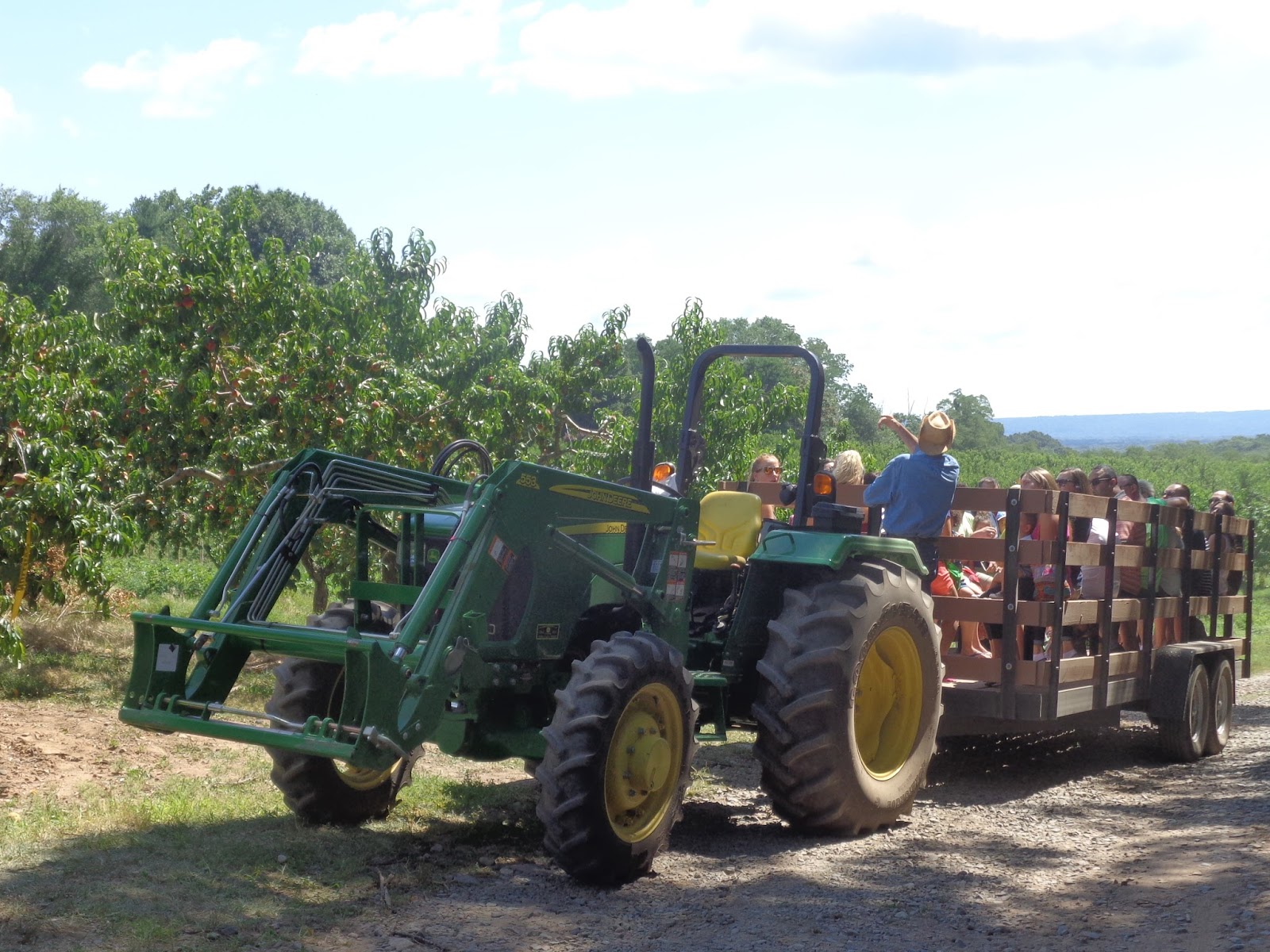
Summertime peaches at Demarest Farm in Hillsdale, New Jersey. So many people in my area have fond recollections of Van Riper's farm in Montvale from their childhood, as do I. It is long shuttered, but it's funny it still pulls at so many memory strings. I love visiting family farms all four seasons.

"Passing by a waist-high stone wall, he was surprised to find fine-thorned brambles passed up against it. He stopped again. The plants made a dense blanket woven of brown, gray, and green. And it was studded with purple beads in tight cones. Yes, wild blackberries, he knew them! Nature's artistry. He'd seen nothing more beautiful in the tapestry collection at Victoria and Albert Museum in London." -The Finest Mask, a short story by J.J. Brown
Blackberries from a roadside stand on a summer visit a few years ago to Lake George, New York, although when I remember blackberries they transport me so often to lush Washington state. Nature's artistry, indeed.

Louise remembered that tree from the tour with Laurent - firmly planted, ancient, maybe even wise, reaching for the sky. It seemed a tree that would share the secrets of the universe if one sat underneath its branches long enough, like the stories of the Buddha she'd heard in Sunday school as a kid." - After the Ballet by Jessica Rosevear Fox, a short story about two sisters, one a retired ballerina, traveling to a lavender farm they unexpectedly inherited in Provence. It's so worth seeking out the lesser known authors like J.J. Brown and Jessica Rosevear Fox who are making great art with their words.
If trees could talk. Washington stayed here at the Steuben House in Hackensack, New Jersey.

"The family took all the seeds from the garden and then they buried Nokomis there, deeply, wrapped in her blanket with gifts and tobacco for the spirit world. They buried her simply. There was no stone, no grave house, nothing to mark where she lay except the exuberant and drying growth of her garden.
Nokomis had said:
I do not need a marker of my passage, for my creator knows where I am. I do not want anyone to cry. I lived a good life, my hair turned to snow, I saw my great grandchildren, I grew my garden. That is all.” - Makoons by Louise Erdrich.
While I cannot wait to share Laura Ingalls Wilder's Little House series with my daughters, I also plan to share with them Erdrich's Birchbark series following an Ojibwa tribe in the 1800s roughly about the same time Wilder's stories take place.

"This is not your land," William Lobb said.
"Oh, it is, it is. I got the papers. I can show you, back at the camp."
"This is Indian land, if it's anyone's." William Lobb spoke as if he hadn't heard Billie Lapham. "Those Miwoks encamped just south of here - they've been here longer than you. It's theirs, or it's God's land - take your pick.” - At the Edge of the Orchard by Tracy Chevalier, a dark look at frontier life in Ohio, then moving the story on to California amidst the Gold Rush.
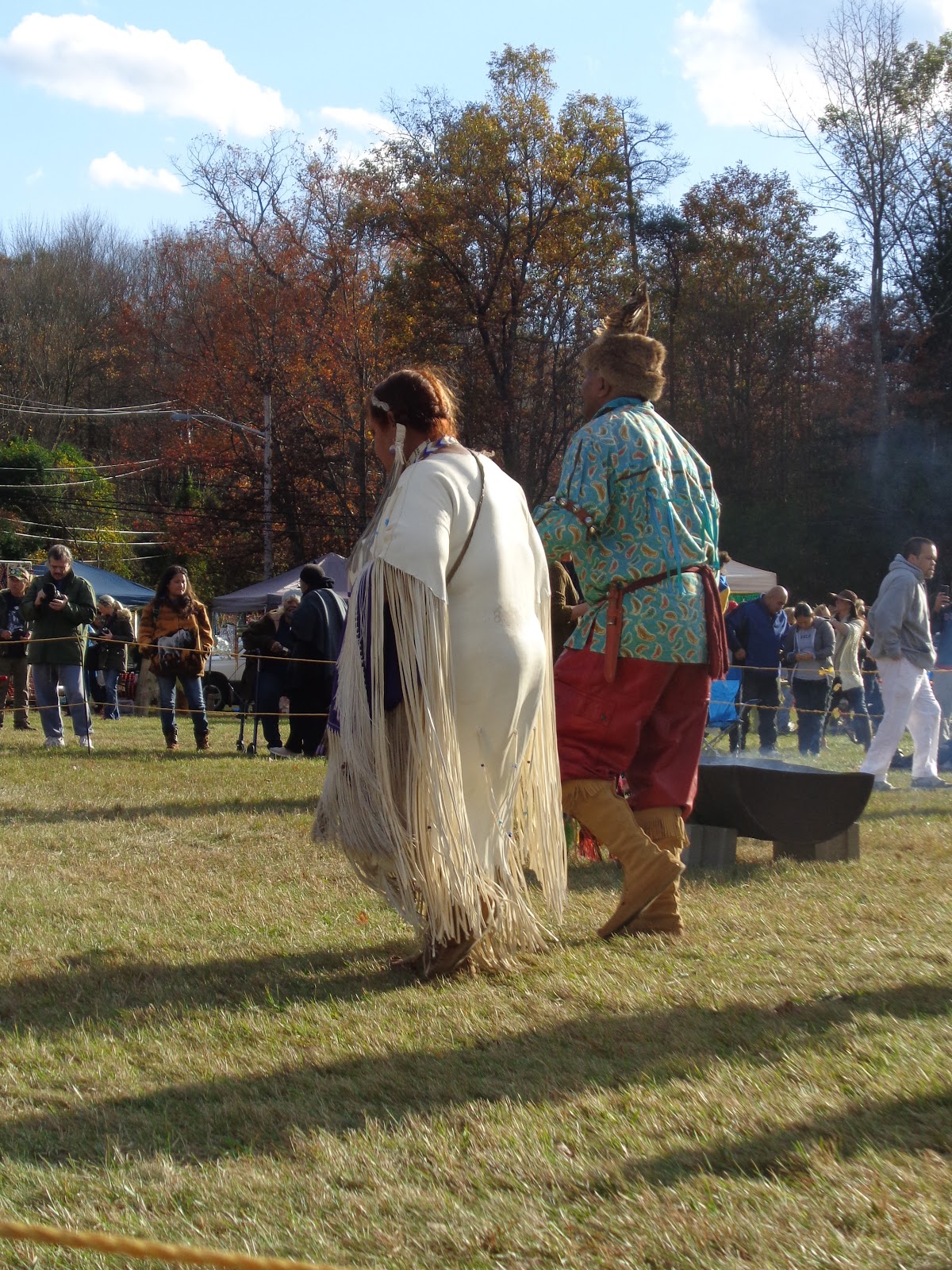
At the Ramapough Powwow in Ringwood, New Jersey, in October. I feel very connected to Native American culture because of their own connection to the land.
"No - the stars are close and dear and I have joined the brotherhood of the worlds. And everything's holy - everything, even me." - The Grapes of Wrath by John Steinbeck. I started reading Steinbeck later in life, East of Eden many years ago and more recently Mice of Men, Cannery Row and The Pearl. Cannery Row has been my favorite so far. But I love Steinbeck's passage here in finding the holiness in all things.
Finding my greatest spiritual connections in nature and gardens, here at the New York Botanical Garden, my favorite place in all of New York.

On living in the moment:
"Cleaning and painting finished, the next target was the big ware press in the parlour. Out came delicate china which had been in the family for years. My mother's respect for the Stations weighed against her fear of breakage, but the Stations won every time. Once when a precious jug was broken she mourned it for days, telling us all how long it had been in the family. Finally, Dan, our part-time travelling farm worker, said, "Missus, if it was here that long it was time to break it." And that was the end of that." - To School Through the Fields: An Irish Country Childhood by Alice Taylor

"I use the good china because the world is huge and full of pain and loss; if a plate cracks or a teacup shatters, no one is harmed. What’s the point of life if the good stuff always stays locked away, safe and forbidden? When something beautiful finds its way to you, you must incorporate its beauty into your life, even if that means you risk losing it."
Bravo, Sarah. You sound like a kindred spirit, an old soul.
"In her mind she could remember about six different tunes from the pieces of his [Mozart's] she had heard. A few of them were kind of quick and tinkling, and another was like that smell in springtime after a rain. But they all made her somehow sad and excited at the same time.
She hummed one of the tunes, and after a while in the hot, empty house by herself she felt the tears come in her eyes.” - The Heart is a Lonely Hunter by Carson McCullers
While I have so much to learn about it, all I know it that putting on classical music stills my soul, like this autumn rose at the New York Botanical Garden.

"While living next to Mariage Freres, I fell in love with drinking tea. There's just something luxurious about sipping a fragrant tea from a faraway land." - Bright Lights Paris (Shop, Dine and Live...Parisian Style) by Angie Niles. How many coffee table books do we ever really flip through? Hardly any here, which is why I gave the majority of mine away. I think of this visually stunning book as a more compact, accessible book than those bulky behemoths that just collect dust. Just looking at it for a few moments whisks me away to Paris. Niles wrote about tea in "The French Art of Tea" section as well as finding a love of Moroccan mint tea. Like finding a passion for books later in life, I also really fell in love with tea later and the "art" of it, as Niles rightly referred to it. I think the first seeds were planted though as a young girl served tea in fine china along with a homemade fruit at a relative's house in Switzerland. It all seemed so elegant. Here, Moroccan mint tea from a day trip years ago to Tangier. The memory of it lasted longer than the few moments it took to drink it. Can you imagine if this was in a Styrofoam cup? Yes, there is an art, a beauty, in tea if you drink it properly.

On the perfect marriage of good meals and good conversation:
"Four days, eight days, twelve days passed, and he was invited to teas, to suppers, to lunches. They sat talking through the long green afternoons - they talked of art, of literature, of life, of society and politics. They ate ice creams and squabs and drank good wines." - Dandelion Wine by Ray Bradbury
This fits in with French good living to me. I was saddened to hear of the closing of Pigalle in New York City where I share many a civilized lunch with a friend discussing those very things in Dandelion Wine. I'm so grateful to have e-mail to connect me with friends who live far, but how I miss conversation. My blog is probably outdated since most people want the pithiness of Instagram, just a quick photo and caption, or a few characters on twitter. So many people's blogs are on hiatus or retired, and I understand why, but I miss reading them and their musings on frugality, the thrift market, animal welfare, books, and so on. They were a conversation too in a way. I like to think mine is, or at least a diary of sorts.
The apple tarte tatin at Pigalle, which followed a conversation on books, family, politics, and life. Farewell and thanks for all of the good meals.

Lastly, on reading:
"I looked at the book lying on a table. Though not a great reader myself, I knew that those who were - even Nora - could grow testy when one came between them and their books." - Hanging Mary by Susan Higgenbotham, an engaging novel of Mary Surratt and the Lincoln assassination, a book I would have never found if not for it sitting on the library shelf nudging its way into my life.
Isn't it funny how books find their way into our lives as people do? So much of what I have read has been because another reader passed their book on. Another part of my household downsizing campaign has been to drastically downsize my book collection, passing them on to charity resale shops. I used to be cheered by the sight of so many books in my home but now it's quite the opposite. I have kept some cherished favorites for now that I'd either like to share with Grace and Pearl or have my own sentimental reasons. Others I had every intention of reading but have sat on my shelf for too many years. I believe books are living things that should keep on telling their stories, which they can't do collecting dust on a shelf.
In Seattle, a Little Free Library. If you love a book, set it free.

These were my storytellers for 2016 and a record of where they found me:
Goodwill
The Beet Queen by Louise Erdrich
A Year in Provence by Peter Mayle
Library
To School Through the Fields: An Irish Country Childhood by Alice Taylor
The Heart is a Lonely Hunter by Carson McCullers
The Grapes of Wrath by John Steinbeck, library book sale
We'll Always Have Paris: A Mother/Daughter Memoir by Jennifer Coburn
Dandelion Wine by Ray Bradbury
Hanging Mary by Susan Higgenbotham
Makoons by Louise Erdrich
Shaw's Book Shop, Westwood, New Jersey
At the Edge of the Orchard by Tracy Chevalier
After the Ballet (Short Story) by Jessica Rosevear Fox
The Well Read Bookstore, Hawthorne, New Jersey (Now sadly shuttered)
The Good Earth by Pearl S. Buck
Bright Lights Paris (Shop, Dine and Live...Parisian Style) by Angie Niles
Better World Books
The Chili Queen by Sandra Dallas
Loan from a friend
Rococo by Adriana Trigiani
Gift
The Finest Mask (Short Story) by J.J. Brown, which is featured in the collection Alt. History 102